Medizinischen Informatik, Statistik und Dokumentation

Research Focus Computational Semantics for Health

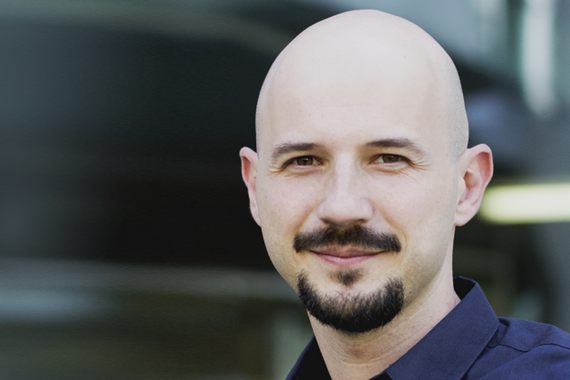
PI: Markus Kreuzthaler

Focus: The main focus lies on the AI-based semantic modeling and interpretation of text-based clinical and research data for the creation of structured and standardized patient profiles based on international standards (SNOMED CT, ICD, LOINC, HL7 FHIR, OMOP). The employed technologies combine data-driven neural approaches, such as language models, with ontologies, knowledge bases, and rule-based methods. The resulting structured information supports primary and secondary use scenarios including clinical document retrieval, data analysis, decision-making, and quality assurance.

Networking: The team’s key collaboration partners currently include KAGes (Styrian Hospital Association), the Diagnostic and Research Center for Pathology, the clinical departments of Oncology and Cardiology, and the University Center for Acute Medicine, as well as CBmed GmbH in Graz, the Austrian Primary Care Association (APCA), and the industry partners ELGA GmbH and XUND GmbH in Vienna. In Germany, close collaborations exist with the text mining company Averbis GmbH in Freiburg, the Technical University of Munich, and the German Research Center for Artificial Intelligence (DFKI) in Berlin. In addition, the group maintains strong connections with universities in Bordeaux, Curitiba, Maastricht, Murcia, and Ljubljana, the Bern University of Applied Sciences, as well as Roche Diagnostics in Basel and Belmont.
Projects

AI-Based Coding Approaches

In collaboration with KAGes, AI-based methods for improving outpatient ICD-10 diagnosis coding and procedure coding based on the MEL catalog are being adapted and evaluated. Previously coded short texts from routine clinical documents are assessed in a secondary use scenario to optimize model-based language technology approaches for this task.

Duration: 2025–2026
Project partners: KAGes, University Clinic of Urology

AIDAVA - AI-powered Data Curation & Publishing Virtual Assistant

  • AIDAVA uses artificial intelligence (AI) to convert patient data of various degrees of structure, particularly from reports and discharge summaries, into a coded form suited for querying. Natural language processing methods and large language models are used. We are primarily involved in the manual annotation of clinical narratives, which are used to train and validate these AI ​​models. Codes from the international ontology-based terminology standard SNOMED CT represent all information contained in these texts. The application of this standard is supported by a comprehensive annotation guideline developed by us. The target format for representing patient-specific information is a so-called knowledge graph, which can be used to query clinical information for care and research in a standardised way. AIDAVA's clinical application domains are breast cancer and ischemic heart disease.
  • Period: 2022-2026
  • Funded by: European Commission
  • Project partners: b!loba, KU Leuven, The European Institute for Innovation through Health Data, European Cancer Patient Coalition, European Heart Network AISBL, ONTO - Sirma AI EAD, NEMC - Sihtasutus Põhja-Eesti Regionaalhaigla, Averbis GmbH, European Research and Project Office GmbH, UM - Maastricht University, Egnosis by Gnome Design Srl, MIDATA Cooperative, Digi.me Ltda

PREMEDICAL

The PREMEDICAL project (Predicting Patient Outcomes in Emergency Departments with Causal Machine Learning) aims to structurally improve outpatient care in hospitals through enriched information provided by XUND’s Medical API and the subsequent development of predictive models based on machine learning methods. To achieve this, the contents of clinical free texts are transformed into structured and standardized representations using language technologies in order to support the predictive models.

Duration: 2022–2026
Funding: FFG Basic Programme
Project partners: XUND GmbH, KAGes, University Center for Acute Medicine, TU Wien

GeMTeX - German Medical Text Corpus

  • We are an external partner of GeMTeX (German Medical Text Corpus), a project that aims to make clinical narratives usable for research projects and thus create the largest collection of clinical summaries in the German language. Since its kick-off in June 2023, texts have been collected at six clinical sites and manually annotated by trained assistants. The resulting data serves as a reference to improve automatic annotations and is used for analyses and the training of statistical models. GeMTeX uses the infrastructure of the German Medical Informatics Initiative (MII) to systematically enrich clinical documents and make them available anonymously. Our contribution to date has been to share the text annotation principles, practices, and experiences from AIDAVA (see above). The AIDAVA annotation guide is used as a reference for GeMTeX's own annotation strategy.
  • Period: 2023-2026
  • Project partners: Charité – University Hospital Berlin, ID GmbH & Co. KGaA, Technical University of Darmstadt, Dresden University of Technology, University Hospital Erlangen, University Hospital Essen, Averbis GmbH, Hannover Medical School, Heidelberg University Hospital, German National Library of Medicine (ZB MED), Leipzig University, University of Leipzig Medical Center, Ludwig Maximilian University of Munich, Technical University of Munich, University of Münster, Hasso Plattner Institute for Digital Engineering gGmbH, Tübingen University Hospital

SNOMED CT-Localisation

  • The international ontology-based terminology standard SNOMED CT has long been a field of activity within our focus on biomedical semantics. We provide international advice in this area, e.g., in the German Translation Group and the Modeling Advisory Group of SNOMED International. With the German Interface Terminology, we provide a large indexing vocabulary in German for SNOMED CT, which has successfully been used for text-mining tasks.
  • Period: 2015 - 2026
  • Cooperations: Averbis GmbH, Freiburg (Germany) and ELGA GmbH, Vienna

Principal Investigator

Assoc. Professor
Markus Kreuzthaler PhD
T: +43 316 385 13591